The question comes first.
I've worked across strategy, research, creative production, immersive technology, audience development and project leadership.
The common thread isn't a particular technology or type of client. It's working out what needs to happen, bringing together the right people and turning an idea or challenge into something useful.
Here are some examples of how that works in practice following my NIIICE methodology.

Science Museum Group
How should four national museums approach technology in future galleries and exhibitions?
Notice: Technology creates opportunities for museums, but it also brings questions about audience needs, institutional priorities, capability, cost and long-term value.
Identify: Science Museum Group needed a strategic view of how technology could support its galleries and visitor experiences across four museums.
Investigate: I carried out interviews with teams across sites, roles, and disciplines, alongside museum visits, research and analysis. Rather than starting with a list of technologies to adopt, I investigated existing approaches, organisational needs and the opportunities technology might genuinely serve.
Insight: The strategic review produced principles, opportunities, and practical priorities to inform future cross-site decisions about digital, interactive and immersive technology and is informing how work is developed, briefed, and commissioned.

Manchester Libraries / The Space
How do you turn an archive collection into a digital experience worth commissioning?
Notice: Following the defacing of Marcus Rashford's mural in Withington, the community responded with thousands of messages of support. This created an opportunity to preserve and share an extraordinary collective response, but simply archiving the material wouldn't necessarily make it engaging or accessible.
Identify: Manchester Libraries and Withington Walls wanted to create a digital education resource around the archive. The opportunity was to develop a compelling audience experience from the collected messages, with a clear purpose and potential for education and community engagement.
Investigate: Working through The Space, I supported the team to explore creative and technical possibilities, develop the concept, and helped shape the scope and commissioning brief. This involved considering how audiences might discover, navigate and interact with the collection rather than simply presenting it as a digital archive.
Insight: The development process helped turn an initial ambition into a clearer, commissionable experience. MBD subsequently designed and built the interactive resource, demonstrating the value of creative investigation and scoping before committing to a production approach.

Bloomberg Digital Accelerator / ACE
How can cultural organisations explore emerging technology while remaining focused on their audiences and ambitions?
Notice: Cultural organisations face growing opportunities to use digital and immersive technology, but often have limited resources, internal capacity, or experience to investigate what might be possible. Technology-led approaches can also obscure the original audience or organisational challenge.
Identify: The Bloomberg Digital Accelerator created a funded opportunity to help organisations investigate digital possibilities, develop their capabilities, and turn early ambitions into practical projects.
Investigate: As a strategic advisor, I worked with organisations including Birmingham Royal Ballet, the Royal Shakespeare Company, Horniman Museum & Gardens, and Blast Theory. I challenged assumptions, explored audience needs, helped develop creative directions, and advised on project development, technology, partnerships and implementation.
Insight: The organisations were exploring very different opportunities, from immersive performance to new digital tools and audience experiences. The work demonstrated that effective innovation doesn't require a shared technological solution, but a process that connects each organisation's distinctive needs and ambitions with practical experimentation.

Second Home Studios/BFI/StoryFutures — Beachcomber
How can immersive technology create new forms of storytelling to activate your memories?
Notice: Virtual reality creates possibilities for storytelling beyond conventional screens, but using immersion doesn't automatically make an experience more meaningful. The creative challenge is to find ideas that genuinely benefit from the medium.
Identify: Working with Second Home Studios, I explored an original VR experience built around memory, music, imagination and emotional discovery. The opportunity was to develop an experience in which the audience's relationship with a virtual environment became part of the storytelling.
Investigate: I worked on the creative concept, writing, development, scoping and production of Beachcomber, exploring how fantastical environments, musical objects, and interaction could communicate memories and emotional experiences.
Insight: Beachcomber developed into an original immersive storytelling project that was commissioned by BFI and StoryFutures. I brought together narrative, animation, sound, and interaction and demonstrated how creative development and technical production need to inform one another when exploring new experiential formats.

BBC Three/YouTube/Google – My Mental Health In VR
How can emerging creative technology enable new ways to communicate difficult personal experiences and emotions?
Notice: Emerging technologies offered new possibilities for visual storytelling, but were often being explored primarily as technical demonstrations. There was an opportunity to use those capabilities to communicate personal experiences in ways conventional formats might struggle to achieve.
Identify: At BBC Three, I saw the potential to use virtual reality painting and mixed-reality production to explore experiences of mental health through a new visual language.
Investigate: Working within the BBC's Digital Guerrillas innovation team, I developed the format and brought together BBC Three, YouTube Space London, and Google's Tilt Brush technology. The collaboration combined creative development, facilities, technical expertise, and production capabilities that would otherwise have been difficult to assemble within the available resources.
Insight: The project produced an original storytelling series that reached millions of people and gained national news coverage. The project demonstrated how emerging technologies could serve a clear editorial purpose and showed how partnerships across organisations could make ambitious creative experimentation possible.

TEEM – Group Navigation R&D
How can groups navigate together without one person taking control of the entire experience?
Notice: When families or groups navigate attractions, shops or unfamiliar places, one person often holds the phone, follows the directions and makes the decisions. The technology helps the group reach its destination, but can concentrate control in one person's hands.
Identify: There's an opportunity to distribute information, roles and decision-making across a group, making the journey itself more collaborative without adding unnecessary complexity or distraction.
Investigate: I'm exploring role-sharing, physical cards, familiar audio devices and simple group challenges. Initial experiments are being developed around supermarket shopping and family navigation, comparing screen-based approaches with tactile, shared alternatives.
Insight so far: The emerging proposition is that a navigation experience doesn't need to give everyone more information or more screens. It may be more useful to distribute agency, rotate responsibilities and give people meaningful reasons to participate in the shared journey.

MAGPIE – Cross-venue cultural discovery R&D
How can shared memories of cultural experiences help people discover what to do next?
Notice: After visiting a museum, gallery or cultural attraction, people naturally discuss what they enjoyed, what surprised them and what they didn't understand. All opinions are valid. Those conversations reveal individual interests and shared experiences, but rarely connect to future cultural discovery, especially between venues.
Identify: There's an opportunity to use informal group reflection to create shared memories, recognise individual interests and encourage discovery across cultural venues, without turning the experience into a survey or another demanding digital activity.
Investigate: I'm developing a concept that helps groups keep what they notice, reflect on their visits, preserve distinct individual impressions, and connect those memories to collections, venues and future experiences. I'm exploring opportunities to develop and test the approach with cultural and research partners.
Insight so far: The strongest opportunity may not be to provide more information during a visit, but to build on the conversations people already have afterwards. A digital experience could facilitate those human interactions rather than attempt to replace them and lower the barriers to engagement with visual arts.

LOOP ROOM – Collaborative creativity R&D
How can immersive technology help people make music together, regardless of their experience or ability?
Notice: Digital music tools have made sophisticated music creation increasingly accessible to individuals, but collaborative music-making in groups still often depends on technical knowledge or established musical roles.
Identify: There's an opportunity to create an environment where people can participate in music-making together through intuitive physical interactions, with the technology supporting collaboration rather than requiring individuals to master a complex interface.
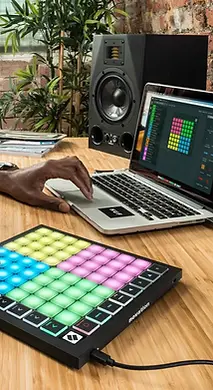
Investigate: I'm developing Loop Room as an immersive, collaborative music-making environment using visuals, rhythm grids, and tangible interfaces. Early R&D is exploring MIDI controllers, physical markers, interactive projection and accessible approaches to group composition.
Insight so far: The working hypothesis is that collaboration can become part of the musical interface itself. Shared physical space, accessible interactions and immediate feedback could allow people with different abilities and levels of confidence to create music together.